

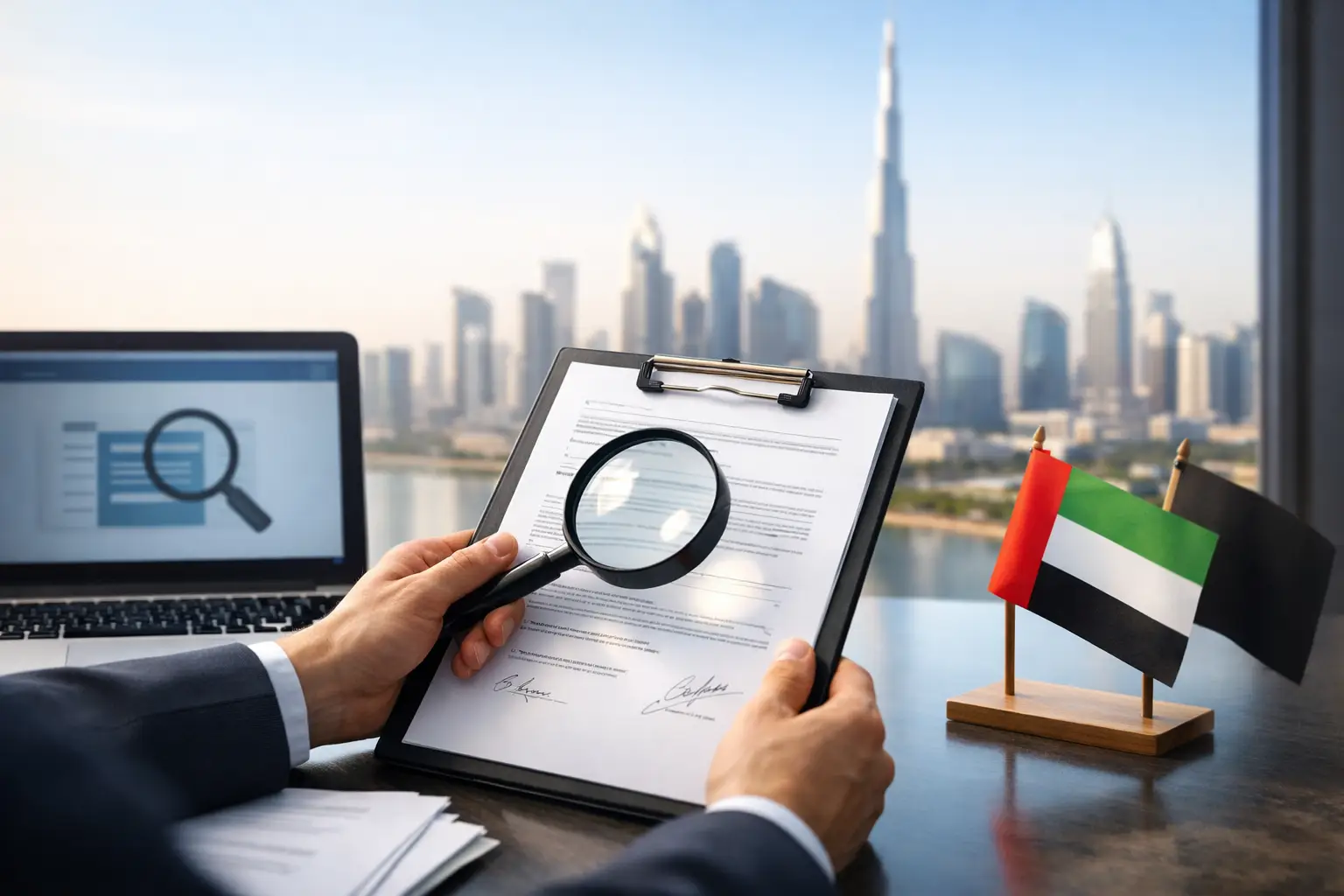
A trade license that looks polished on paper can still leave you exposed if the company behind it is inactive, expired, or registered in a different jurisdiction than claimed. If you are researching a supplier, distributor, service provider, or potential investment target, knowing how to check company registration in UAE is a basic risk-control step, not an administrative formality.
In the UAE, company verification is not handled through one single national database in the way some founders expect. The right search method depends on where the business is registered – mainland, free zone, or, in some cases, offshore structures with more limited public visibility. That difference matters because many misunderstandings happen when people search the wrong authority and assume the company does not exist.
How to check company registration in UAE the right way
The first step is to identify the company’s legal jurisdiction. In the UAE, a business may be licensed by a mainland Department of Economy and Tourism or Department of Economic Development, or by an individual free zone authority such as DMCC, IFZA, Dubai South, JAFZA, ADGM, or another regulator. If you do not know the jurisdiction, ask for the trade license copy, certificate of incorporation, or establishment card details before moving forward.
A valid UAE company should be able to provide its legal name, license number, issuing authority, and licensed activity. If a business hesitates to share those basic records, that is already useful information. Serious operators understand that banks, partners, and clients routinely ask for verification documents.
Once you have the legal name and issuing authority, search the relevant official register. For mainland companies, this usually means checking the emirate-level commercial registry or business license verification tool. For free zone companies, you need to use the specific free zone authority’s own portal or verification channel. Searching only Google, LinkedIn, or a company website is not enough.
Start with the company’s trade license details
The trade license is the fastest document to review because it tells you what the company is actually authorized to do. In many cases, disputes start when one party assumes a company is approved for a broader activity than its license permits.
Review the legal company name carefully. In the UAE, a trading name can be different from the legal entity name, and minor spelling differences matter. Check the license number, issue date, expiry date, and business activity. If the company says it is a consultancy but the license only covers general trading, that mismatch needs clarification.
You should also check whether the company is mainland or free zone. That is usually visible on the license itself. A mainland LLC in Dubai is not verified the same way as a free zone company in DMCC or RAKEZ. The document should also show the issuing authority clearly. If that field is missing, blurred, or inconsistent, request a clearer copy.
What a valid document should tell you
At minimum, the registration documents should confirm the company’s legal identity, licensing authority, activity scope, and status period. Depending on the jurisdiction, they may also show the registered address, manager, or shareholder information. Public visibility varies, so do not assume every UAE registry will display the same level of detail.
That is where many overseas founders get confused. They expect identical disclosure standards across all emirates and free zones. In reality, the UAE is highly business-friendly, but registration systems are decentralized.
Check the official issuing authority
For mainland businesses, the most reliable verification route is the commercial registry or license lookup system maintained by the relevant emirate authority. Dubai, Abu Dhabi, Sharjah, and the other emirates each manage registration through their own official channels. If the business says it is a Dubai mainland company, verification should come from Dubai’s licensing authority, not from a free zone portal.
For free zone companies, go directly to the free zone authority. Many major free zones provide online verification tools, while others may require a direct inquiry, email confirmation, or document review. If a company claims to be registered in a free zone but cannot identify which one, treat that as a warning sign.
The key point is simple: verify the company where it is actually licensed. The UAE does not operate as a single licensing bucket, and using the wrong database can lead to false conclusions.
How to verify a free zone company
Free zone companies are common in the UAE because they offer speed, ownership flexibility, and sector-focused ecosystems. But each free zone is its own authority, with its own registration process and compliance rules.
If you are checking a free zone company, start with the free zone name listed on the license. Then confirm that the legal company name and license number match the authority’s records. Some free zones provide direct public searches. Others offer verification only after a formal request. That does not automatically mean the company is suspicious – it simply reflects different administrative practices.
What matters is whether the authority can confirm the entity exists and holds an active license. If the company is asking for a large advance payment, introducing itself as a regulated adviser, or offering distribution rights, you may want to go further and request certified incorporation documents and proof of current good standing.
Offshore and less visible structures
Some UAE-related structures are not designed for broad public search in the same way operating mainland or free zone companies are. If you are dealing with an offshore entity or a holding structure, public information may be limited. In that case, document-based verification becomes more important.
Ask for incorporation records, registered agent confirmation, and beneficial ownership disclosures where appropriate. If the transaction is material, legal due diligence is usually the smarter route than relying on surface-level online checks.
What to look for beyond registration
A company can be legally registered and still be a poor counterparty. Registration confirms existence, not commercial reliability. If you are entering into a supply agreement, investment, acquisition, or service contract, you should also look at operational credibility.
Check whether the business has an active office, a matching VAT profile if applicable, a corporate bank account in the same legal name, and documentation that aligns across invoices, contracts, and license records. If the trade license is one name, the invoice is another, and the payment request goes to an unrelated personal account, stop and clarify before proceeding.
It also helps to check the license activity itself. In the UAE, licensed activities are specific. A company may be validly registered but not authorized for the service it is marketing. That is especially relevant in regulated sectors such as finance, legal services, healthcare, education, and real estate-related activities.
Common issues people miss when checking company registration in UAE
One common mistake is checking only whether the business name appears somewhere online. A website or social profile does not prove legal standing. Another is ignoring the license expiry date. A company may have been validly formed but allowed its license to lapse.
A more subtle issue is name confusion. Companies may operate under similar trading styles, especially in larger commercial hubs. Always verify the exact legal entity, not just a close match. The license number and issuing authority are more reliable than the brand name alone.
There is also the question of jurisdiction fit. A free zone company may be perfectly legitimate but restricted in how it conducts certain onshore activities unless additional approvals are in place. If your transaction depends on local market operations, registration alone may not answer the full legal question.
When professional verification makes sense
If you are appointing a distributor, investing capital, purchasing a business, or entering a high-value contract, basic registry checks are a starting point, not the finish line. In those cases, professional support can save time and prevent expensive errors.
This is especially true for overseas founders managing UAE transactions remotely. Fast end-to-end support is not just about setup – it also matters when verifying counterparties, reviewing licenses, and understanding whether a company’s structure matches the commercial activity it is offering. Firms such as AB Capital Global often help clients read beyond the paperwork and spot issues that are not obvious from a registry result alone.
If you only need a quick confidence check, ask for the trade license, incorporation documents, and official authority details, then verify them with the issuing body. If the deal carries legal, banking, or compliance risk, go one step further and have the records reviewed properly.
The practical approach is this: trust official records first, documents second, and marketing claims last. In the UAE, credible businesses are usually easy to identify once you check the right authority and ask for the right paperwork. A few extra minutes of verification upfront can save months of recovery work later.


Pingback: Trade License Renewal Checklist UAE Businesses Need - AB Capital Global