

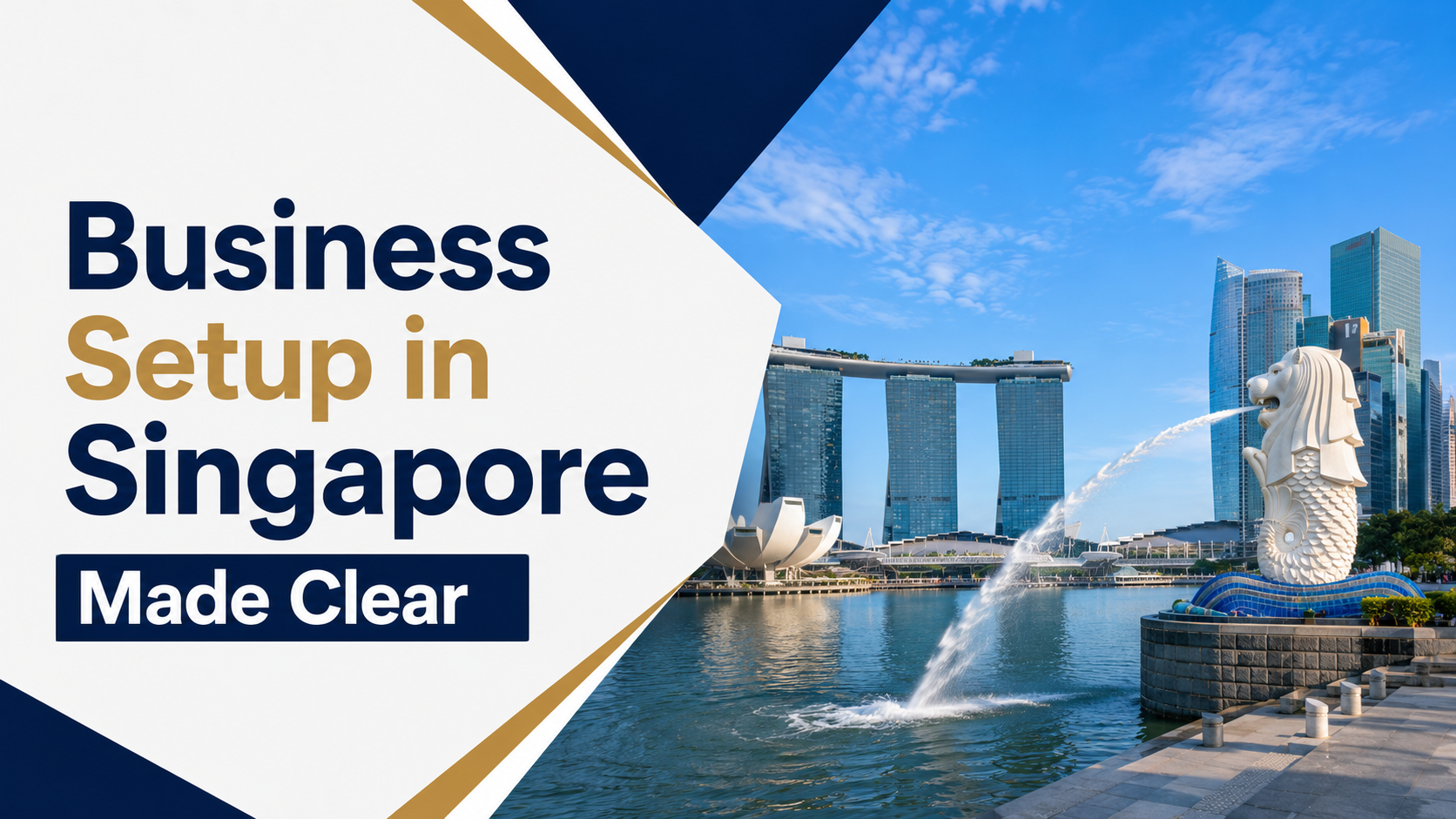
Singapore is often shortlisted for one reason that matters to serious founders – it is efficient without feeling uncertain. If you are evaluating business setup in Singapore, the appeal is straightforward: a respected jurisdiction, a stable regulatory environment, a strong banking ecosystem, and a company formation process that is generally faster and cleaner than many other global hubs.
That said, speed on paper does not remove the need for good decisions. The wrong entity type, a poorly chosen business activity, or weak preparation for compliance and banking can slow down your launch. For international entrepreneurs, the real goal is not simply registration. It is setting up a company that can operate, open accounts, stay compliant, and support growth from day one.
Why business setup in Singapore attracts global founders
Singapore continues to appeal to startups, consultants, traders, holding companies, and regional expansion teams because it combines credibility with practicality. A Singapore company is widely recognized by banks, counterparties, and investors. That matters if you are selling internationally, managing regional operations in Asia, or building a structure that needs long-term trust.
Tax is another major reason founders look closely at Singapore. The headline corporate tax framework is attractive, but the real advantage depends on your business model, where revenue is generated, and how profits are structured. For some businesses, Singapore can be highly efficient. For others, the benefit is more about reputation, legal stability, and ease of administration than tax alone. This is where a strategic setup matters more than a fast filing.
Founders also value predictability. In many jurisdictions, incorporation is only the first hurdle and post-registration friction causes the real delay. Singapore is generally more organized, but regulated activities, nominee arrangements, substance questions, and bank onboarding still require planning. A clean process comes from preparing the full setup path in advance, not treating incorporation as a standalone step.
Choosing the right structure for business setup in Singapore
For most foreign entrepreneurs, the private limited company is the preferred vehicle. It is scalable, credible, and familiar to investors, banks, and commercial partners. It also separates personal and business liability, which is essential if you are building a serious operating company rather than testing a casual side venture.
A sole proprietorship is usually less attractive for international founders. It may be simpler in limited local situations, but it does not offer the same level of liability protection or corporate credibility. It is rarely the right choice for a foreign-owned growth business.
A branch office can work if you want the Singapore presence to remain legally tied to the parent entity. This is sometimes useful for established companies expanding into Asia. The trade-off is less flexibility and a closer legal link between the branch and the foreign parent.
A representative office is even narrower. It may suit early market research, but it does not allow full commercial activity. If your aim is to trade, invoice, hire, or scale, it is usually not the structure you want.
In practice, most international clients comparing options end up with a private limited company because it gives the best balance of legitimacy, flexibility, and long-term usability.

The key requirements foreign founders need to understand
Singapore is business-friendly, but not regulation-free. Foreign founders typically need at least one local resident director. This is one of the first planning points because it affects control, compliance, and service scope. If you do not already have an eligible person in place, you need a lawful solution before incorporation can move smoothly.
You will also need a registered local address, a company secretary within the required period after incorporation, and an appropriate shareholding structure. None of these are unusual, but each must be handled correctly. Mistakes at this stage can create avoidable amendments and delays.
Your proposed business activity also matters. Some activities are straightforward, while others may require approvals, licenses, or extra review. Founders often underestimate this point. A broad business description may seem convenient, but licensing exposure, risk classification, and banking review can all be affected by how the activity is framed.
If the company will require visas, staffing, or physical presence, then your setup strategy should account for that early. A company can be incorporated quickly yet still face delays in becoming fully operational if immigration, employment, or office requirements were not considered from the start.
What the setup process usually looks like
A well-managed business setup in Singapore usually starts with entity planning, not filing. That means confirming the shareholders, director arrangement, proposed activities, share capital, and whether the company will be operational immediately or used first as a holding or regional vehicle.
The next step is name approval and document preparation. This part is relatively efficient when the ownership structure is simple and the supporting documents are complete. Delays tend to happen when founders provide inconsistent identification records, unclear proof of address, or incomplete information on the parent company and ultimate owners.
Once incorporated, the focus shifts to operational readiness. This includes statutory registrations, company secretarial matters, accounting setup, and banking preparation. For many founders, banking is where expectations need to be realistic. Opening a corporate account is possible, but banks now review international structures carefully. They want to understand the business model, source of funds, counterparties, and commercial substance behind the company.
That means the best setup process is not the one that produces a certificate fastest. It is the one that presents your company clearly to regulators and banks so you can start trading without avoidable friction.
Costs, timelines, and where founders miscalculate
Singapore is not the cheapest jurisdiction, and that is usually not why serious businesses choose it. The value comes from credibility, efficiency, and international acceptance. Still, founders should look beyond the initial registration fee.
Your total cost may include incorporation, resident director support if needed, company secretary services, registered address, compliance filings, accounting, tax support, and banking assistance. If your business needs a regulated license or immigration support, your budget should reflect that from the start.
Timelines can be fast for clean structures, but fast is not guaranteed. A simple company may be incorporated quickly, while bank account opening, licensing, or cross-border ownership checks can take longer. Founders often miscalculate by assuming the company is fully launch-ready on the day of registration. In reality, the incorporation date is usually just one milestone in the process.
Compliance is manageable if you set it up properly
One reason Singapore remains attractive is that compliance is structured and generally predictable. But predictable does not mean optional. Annual filings, bookkeeping, tax submissions, corporate records, and governance obligations need to be maintained accurately.
This is especially important for overseas founders managing the company remotely. If your internal finance and operations are not organized, even a well-chosen jurisdiction can become inefficient. The practical fix is simple: build compliance into the setup stage. Use clear reporting lines, keep corporate records current, and make sure your advisors are coordinating legal, tax, and operational requirements rather than treating them as separate tasks.
Is Singapore the right jurisdiction for your business?
It depends on what you need the company to do. If you want a respected Asian base, a clean legal framework, and a jurisdiction that supports regional trade and investment, Singapore is a strong option. It is particularly attractive for consulting firms, trading companies, tech businesses, holding structures, and founders who want credibility with international clients and partners.
If your priority is the lowest possible cost, another jurisdiction may be a better fit. If your business model depends heavily on local hiring, sector-specific licensing, or tax treatment across multiple countries, the right answer may also depend on group structure rather than one company alone.
This is why good advisory support matters. The right setup should reflect your activity, ownership, expansion plan, and banking expectations. Firms such as AB Capital Global work with international founders who need that wider view, especially when Singapore is part of a broader cross-border strategy rather than a standalone company registration.
The best setup is the one that still works six months after incorporation – when you are issuing invoices, opening accounts, meeting filing deadlines, and preparing to grow with confidence.
Written and verified by the AB Capital Servicesteam. All information is accurate as of June 2026. Regulations and fees are subject to change. Consult a qualified professional like AB Capital Services before making incorporation or tax decisions.



Pingback: Hong Kong vs Singapore Incorporation Compared - AB Capital Global