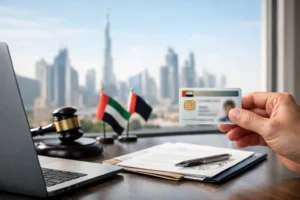


Dubai has become one of the most respected financial centres in the Middle East, attracting investors, fintech entrepreneurs, trading firms, and financial institutions from around the world. As global demand for online trading platforms continues to grow, many entrepreneurs are now exploring how to establish a forex brokerage business in the UAE.
Starting a forex company is very different from opening a standard trading, consultancy, or e-commerce business. The financial services industry is heavily regulated, and investors must understand licensing requirements, compliance obligations, capital planning, technology infrastructure, and operational risks before entering the market.
For serious investors looking to build a long-term financial services business, Dubai offers significant opportunities. However, success depends on preparation, industry knowledge, and selecting the right business structure from the beginning.
Why Dubai is Becoming a Preferred Location for Forex Businesses
Over the last decade, Dubai has transformed into more than just a regional business hub.
The city now serves as a gateway connecting financial markets across Europe, Asia, Africa, and the Middle East. This strategic location allows financial companies to serve clients across multiple regions from a single operational base.
Several factors continue attracting forex businesses to Dubai:
Strategic International Location
Dubai’s geographic position allows companies to operate across multiple time zones and access international markets efficiently.
Strong Financial Ecosystem
The UAE is home to banks, investment firms, fintech companies, family offices, venture capital funds, and international financial institutions.
Business-Friendly Environment
The government continues introducing initiatives that support entrepreneurship, innovation, and foreign investment.
Growing Investor Confidence
International investors increasingly view Dubai as a stable and reliable destination for long-term business growth.
What is a Forex Brokerage Business?
A forex brokerage acts as an intermediary between traders and the foreign exchange market.
Rather than trading solely for its own profit, a brokerage provides clients with access to trading platforms, market data, liquidity, and execution services.
Typical revenue streams include:
| Revenue Source | Description |
| Trading Spreads | Difference between buy and sell prices |
| Commissions | Charges per trade |
| Swap Fees | Overnight position fees |
| Platform Services | Additional trading tools and services |
| Premium Support | Enhanced client services |
This business model allows companies to generate recurring revenue as client trading activity increases.
Why Entrepreneurs Are Considering Forex Businesses in 2026
The forex industry continues evolving alongside technology and digital finance.
Several trends are driving interest:
Growth of Online Trading
Retail investors now have easier access to global markets than ever before.
Expansion of Financial Technology
Advanced trading platforms, AI-driven analytics, and mobile applications continue making trading more accessible.
Demand for Regulated Brokers
Investors increasingly prefer regulated financial institutions over unregulated providers.
International Market Access
Forex businesses can potentially serve clients from multiple countries without requiring offices in every location.
Step 1: Define Your Business Model
Before considering licensing, investors should determine exactly what type of forex business they want to operate.
Questions to consider include:
- Will the business serve retail or institutional clients?
- Will it operate as a brokerage or introducing broker?
- Will proprietary trading activities be involved?
- Will technology solutions be offered?
- What geographic markets will be targeted?
The answers influence licensing, compliance requirements, staffing needs, and startup costs.
Step 2: Understand Regulatory Requirements
One of the biggest misconceptions is that a forex business can be launched like any ordinary company.
Financial services require significantly higher levels of regulatory oversight.
Entrepreneurs must demonstrate:
- Adequate Capital
- Suitable Management Experience
- Compliance Procedures
- Risk Management Systems
- Operational Readiness
- Corporate Governance Frameworks
These requirements exist to protect investors and maintain market integrity.
Step 3: Build a Compliance Framework
Many first-time founders focus exclusively on obtaining a license.
Experienced operators understand that compliance is the foundation of the business.
Key compliance areas typically include:
Anti-Money Laundering (AML)
Businesses must implement procedures designed to prevent financial crime.
Know Your Customer (KYC)
Client identities must be properly verified before services are provided.
Risk Management
Companies must monitor operational, financial, and regulatory risks.
Record Keeping
Accurate documentation is essential for audits and regulatory reviews.
Step 4: Establish Banking Relationships
Banking is often one of the most important aspects of launching a financial services business.
Banks evaluate:
- Business Activity
- Shareholder Background
- Compliance Procedures
- Source of Funds
- Business Plan
Companies that prepare early generally experience smoother onboarding processes.
Step 5: Invest in Technology
Technology can determine whether a brokerage succeeds or struggles.
Essential infrastructure may include:
| Technology Area | Purpose |
| Trading Platform | Client Trading Access |
| CRM System | Customer Management |
| Payment Solutions | Deposits and Withdrawals |
| Risk Monitoring | Compliance Oversight |
| Cybersecurity | Data Protection |
Reliable technology helps improve customer experience and operational efficiency.
Common Mistakes New Forex Businesses Make
Choosing the Cheapest Option
Financial services businesses should focus on long-term sustainability rather than minimizing initial costs.
Ignoring Compliance
Compliance is not a one-time requirement. It is an ongoing responsibility.
Underestimating Operational Costs
Many startups budget for licensing but overlook technology, staffing, and ongoing regulatory expenses.
Hiring Too Late
Experienced compliance, risk, and operations personnel should be involved early.
Focusing Only on Trading
Successful brokerages focus equally on customer service, trust, technology, and compliance.
Is a Forex Brokerage Business Profitable?
The profitability of a forex brokerage depends on:
- Client Acquisition
- Trading Volume
- Operational Efficiency
- Regulatory Compliance
- Technology Infrastructure
- Risk Management
Like any business, profitability is not guaranteed.
However, companies that establish strong foundations often benefit from scalable revenue models and recurring client activity.
Why Long-Term Planning Matters
Many entrepreneurs enter the industry attracted by perceived profit potential.
The most successful operators typically focus on something different:
Building a trusted financial institution.
Trust, compliance, transparency, and customer service often become the true drivers of long-term growth.
How AB Capital Global Supports Investors
Launching a financial services business requires more than simply registering a company.
Investors often need guidance regarding business structures, jurisdiction selection, regulatory considerations, banking requirements, and operational planning.
AB Capital Global works with entrepreneurs, investors, and international businesses seeking to establish operations in the UAE. Through company formation advisory, compliance planning, and business structuring support, the firm helps clients understand the practical steps involved in building sustainable businesses within the UAE’s evolving business landscape.
Contact AB Capital Services, Dubai
Phone: +971 58 561 9500
WhatsApp: +971 58 569 9300
Email: info@abcapital.ae
Address: Office No 404, Al Tawhidi Building, Bank Street, Bur Dubai, UAE
Additional Resources
For a broader analysis of the advantages and challenges of entering the industry, you can also read:
Pros & Cons of Forex Trading License in Dubai in 2026
Final Thoughts
Dubai continues to strengthen its position as a leading destination for financial services businesses. For entrepreneurs willing to invest in compliance, technology, and long-term growth, establishing a forex brokerage can create significant opportunities.
The key is approaching the industry with realistic expectations and a commitment to building a professional, well-structured operation.
In financial services, long-term credibility is often more valuable than short-term profits, and businesses that understand this principle are usually best positioned for sustainable success.